
The Graph Moves.
Your Data Doesn't.
Query warehouses, databases and files as one knowledge graph, in SQL, Cypher or rules. No ETL, no copies: Prometheux reads each source where it lives, runs the joins and recursion itself, and derives the relationships no table stores.
| product | also bought |
|---|---|
| Trail shoe | Merino socks |
| Trail shoe | Gaiters |
| Rain shell | Dry bag |
Proven in production








Copies Go Stale.
Sources Don't.
A materialised graph is another system to load, secure and keep in sync. A virtual knowledge graph reads the systems of record directly, at query time.
One Graph View,
Many Systems
Each entity in your model points at the system that owns it. When you query, Prometheux reads each source where it lives and runs the joins, recursion and aggregation itself, as distributed jobs.

Read Where It Lives
Each source is read in place at query time. Nothing is loaded into a separate graph store.

Federated Joins
Combine PostgreSQL, MariaDB, Neo4j, mainframe COBOL files and CSV in a single query.

Graph Patterns on Tables
Cypher `MATCH` queries run identically on CSV, Parquet, Iceberg, relational databases or Neo4j.

Your Security Boundary
Prometheux can run inside your environment and keeps your authentication and access controls.
Answer cross-system questions on live data. Retire the copy-and-sync jobs behind your graph. Keep data sovereignty with no extra store.
A Graph Over Data
That Stays Put
Connect
Register each system as a data connection. Prometheux reads its schema; nothing is ingested.
Map
Connect tables, files and queries to the entities and relationships of your model.
Query
Ask in Vadalog, SQL or Cypher. The engine plans the work across sources and runs it.
Trace
Results keep explicit links back to your definitions and source data.
When Moving Data
Isn't an Option
Data Sovereignty
Query sensitive data inside your firewall, on premises or in a private cloud, without creating another copy.
Deployment options →Mainframe Meets Cloud
Join COBOL files with cloud warehouse tables in one query, without a migration project.
Systems That Never Merged
Give acquired systems one graph view while each keeps running as it is.
Live Context for AI
Agents query the graph through APIs or MCP and always see current data from the source.
“The ability to query heterogeneous databases through a flexible ontology makes it possible to infer deep knowledge and automate complex tasks, delivering trustworthy insights that far exceed the capabilities of traditional systems.”
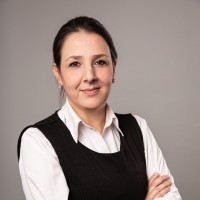 Anna Fava
Former Senior Manager, Data & AI · Dompé
“With Prometheux, we achieved a speed-up of over 250% on critical tasks involving complex reasoning over knowledge graphs with hundreds of millions of nodes and billions of edges.”
Financial institution
Questions,
Answered
What is a virtual knowledge graph?
It is a graph view of your entities and relationships that is computed from the source systems at query time, instead of a copy loaded into a graph database.
Does Prometheux copy my data?
No. Data stays in your systems. Prometheux reads each source where it lives at query time and runs the logic in its own engine.
How is this different from a graph query engine or semantic layer over my tables?
Both give a connected view without moving data. Prometheux also runs rules: recursive Vadalog derives relationships no table stores, such as multi-tier supply, aggregates can roll up along the chain, and every derived fact keeps its lineage to rules and rows.
Can I join data across different databases?
Yes. One query can combine sources such as PostgreSQL, MariaDB, Neo4j, COBOL files and CSV, and the engine runs the join across them without staging any copy.
Can I still materialise results?
Yes. Prometheux reads from and writes to your sources, so you can persist derived results where you choose.
Related Capabilities
Query Everything.
Move Nothing.
Bring the systems you can't consolidate. We'll show them as one knowledge graph, in place.
